Source Universal Travel Adapter for Laptop Phone Camera
Find 30 universal travel adapter options from China with varying output ratings and certifications. Compare specifications for laptop, phone, and game player usage to select the right power solution for your needs; compare the available evidence and request quotations based on your requirements.
Key considerations
Products List
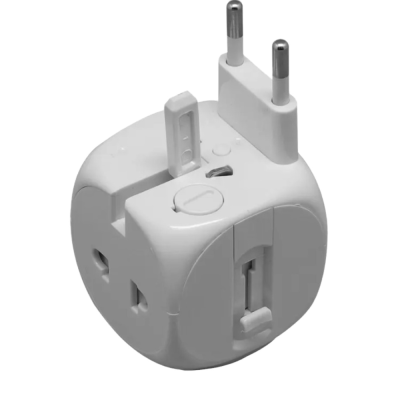
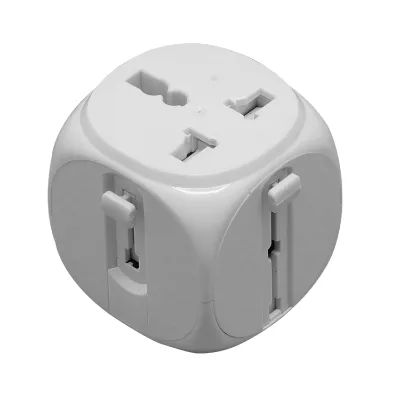


Comprehensive Sourcing Guide
Universal Travel Adapter Sourcing Guide
Procuring universal travel adapters for retail, hospitality, or corporate gifting programs requires balancing electrical safety, plug compatibility, and commercial terms across a fragmented supplier base. Because these products combine mechanical switching, conductive metal parts, and often integrated USB charging circuitry, the cost of a quality failure extends far beyond the unit price. A defective adapter can damage a customer's device, fail destination-market inspections, or expose your brand to liability, so disciplined verification of specifications and documentation should precede any price negotiation.
This guide organizes the sourcing decision into seven practical stages, from interpreting listing signals to building long-term quality controls. The evidence base draws on observed product-page attributes for representative listings, including input ratings of 100–240V 6A, USB outputs ranging from 5V 1.0A to 5V 2.1A, rate ratings of 10A 250V, and features such as single-pin insertion shutters and fire-protection shell materials. Where the listings provide concrete data, this guide cites it; where they are silent, it tells you exactly what to request from suppliers before committing to a purchase order.
Product Scope and Observed Listing Signals
The universal travel adapter category on B2B marketplaces spans several distinct product families. Observed listings include pure plug adapters such as multi travel adapters with universal and multi-socket configurations, USB wall chargers in single-port formats with 5V 1.0A or 5V 2.1A outputs, and combination units rated at 10A 250V with rate power up to 2500W. Model identifiers observed include UPA08, POKA92U, C118, WAT050, WTA-050U, and 611, which signals a mix of factory-designed and customized product lines rather than a single standardized SKU family.
Listing attributes also reveal important sourcing signals. Brand names are listed as "Customized" and product types as ODM, with customization marked available — indicating that most suppliers expect private-label work rather than selling stock brands. Place of origin is consistently China, and pricing across the observed range spans from nominal sample pricing to hundreds of dollars, so unit quotes must always be read against MOQ. Observed MOQs range from 1 unit to 3000 units, meaning sample orders and volume contracts sit on the same pages. Define your target configuration — plug types, USB count, output rating — before comparing prices.
Technical Specifications to Verify
Start with electrical ratings, because travel adapters must tolerate worldwide mains conditions. Observed listings specify input of 100~240V 6A, output type AC, and alternating-current power supply, which is the correct baseline for universal use. For adapter bodies, verify rate voltage of 250V, rate current of 10A, and rate power of 2500W against the markets you serve. For USB-equipped units, confirm whether output is 5V 1.0A or 5V 2.1A, since slower outputs may disappoint buyers charging modern phones, and confirm usage claims covering laptops, phones, game players, and digital cameras are backed by real output capability.
Mechanical specifications matter equally. Ask for product dimensions — observed examples include 6×5.5×4.5CM and 55×54mm — and confirm the plug standard designation, listed only as "Other" in the observed data, so you must obtain an explicit list of supported plug types per destination. Verify safety mechanics such as prevention from single-pin insertion shutters, protection class IP20, and shell material characterized as fire protection and insulation. Confirm Wi-Fi is not claimed unless intended, as one observed listing explicitly states Wi-Fi: No. Put every dimension and rating into your specification sheet before sampling.
Compliance and Safety Documentation
Certification claims observed across listings include ISO and RoHS, standalone RoHS, RoHS combined with CE, and ISO9001:2015 certificate references. Treat these as claims to verify, not guarantees: request certificate copies with issuing body details, certificate numbers, and validity dates, then confirm them with the issuing body where possible. One observed listing cites IEC60669 as the applicable standard, but because plug standards are listed as "Other" in several listings, you must determine which destination-market standards — UK, EU, US, AU, or others — apply to your sales channels and require matching test reports.
Build a documentation checklist that covers electrical safety testing for the adapter body and any USB charging circuit, RoHS compliance for materials, and fire performance of the shell material, which one listing flags with "Fire Proof: Yes." Because warranty is listed only as "Other" in observed data, negotiate explicit warranty terms in the contract, including duration, coverage of electrical defects, and replacement logistics. Never accept a supplier's word that certification "is in progress" for a shipment already in production; tie document delivery to payment milestones so that compliance evidence arrives before goods ship.
Cost Drivers and Commercial Terms
Unit cost in this category is driven by feature count and build quality: the number of plug types supported, whether USB charging is integrated, output current level (1.0A versus 2.1A observed), shell material grade, and safety features such as shutters. Customization adds tooling and printing costs but is widely offered. Observed price points range from under a dollar to the hundreds of dollars, so compare quotes only at identical specifications; a cheaper quote that omits shutters or uses a lower-current USB output is not equivalent, merely different.
Commercial terms vary widely across observed listings. MOQs span from 1 to 3000 units, so align order size with your inventory plan: trial orders at low MOQ carry higher unit prices, while 1000-unit commitments — the observed typical MOQ — unlock better pricing but require demand confidence. Packaging also affects landed cost; observed options include 1pc/PE bag, 1PC/blister card at 60 PCS/CTN, 1PC/hangbag at 100 PCS/CTN, and 20 PCS/gift box at 400 PCS/CTN. Retail-ready packaging costs more than bulk bags, so confirm packaging, payment terms (T/T observed), and lead time — 30–60 days observed — before signing.
Supplier Qualification and Quality Control
Qualify suppliers in three layers. First, verify business credentials: the observed ISO9001:2015 certificate reference suggests some factories operate under documented quality systems, so request the certificate and scope. Second, verify product compliance documentation as described earlier, matching it to your destination markets. Third, verify production capability by asking about in-house versus outsourced assembly, USB circuit sourcing, and whether customization is handled by the factory itself — observed listings state customization is available and type is ODM, which implies factory-level design involvement but should be confirmed.
Quality control should follow a defined inspection sequence. Review golden samples and approve pre-production samples against your specification sheet covering dimensions (such as the observed 55×54mm and 6×5.5×4.5CM formats), ratings, and packaging format. During production, inspect critical safety attributes: shutter function, plug-pin dimensions, shell material fire performance, and USB output measured under load. Before shipment, conduct a final random inspection sized to your order quantity, testing continuity, output voltage, and mechanical switching across the sampled units. Record defect types and rates so you can compare suppliers objectively over successive orders.
Long-Term Procurement Checks
After the first orders, shift from qualification to performance management. Track on-time delivery against the observed 30–60 day lead-time window, noting that custom or peak-season orders may stretch toward the upper bound — build safety stock accordingly. Monitor defect returns by model, since product families like the observed single-port chargers and multi adapters will fail differently: chargers fail electrically, adapters fail mechanically. Review whether certification documents remain valid across production cycles, because component substitutions — especially in USB circuits — can quietly invalidate earlier test reports without any visible change to the finished product.
Relationship management also benefits from structure. Consolidate volume with suppliers who consistently pass inspections and communicate proactively about engineering changes, but keep at least one qualified alternative for each core SKU to protect against capacity or compliance disruptions. Re-spec products periodically: output expectations for phone and laptop charging evolve, plug-type demand shifts with your market mix, and packaging formats such as blister card versus PE bag should be re-evaluated against retail requirements. Renegotiate pricing annually using your accumulated order history, and formalize warranty terms once the "Other" placeholder in early listings has been replaced by a concrete, signed agreement.
FAQs
What certifications do these universal travel adapters carry?
Listed universal travel adapters carry RoHS certification, with some models also showing CE certification and ISO9001:2015 quality management certification. Certification coverage can vary by model, so confirm the exact certificates for the specific adapter before ordering. RoHS compliance relates to hazardous substance restrictions, while CE indicates conformity for applicable European requirements on the listed products.
What is the typical output specification of the USB charging adapters?
The listed adapters provide AC output, with USB models offering 5V 2.1A or 5V 1.0A output depending on the model. Input is rated at 100~240V 6A, which supports worldwide voltage ranges. Higher-amperage 2.1A ports suit tablets and faster phone charging, while 1.0A ports handle standard phone and small device charging adequately.
Which devices can be charged with these universal travel adapters?
Stated usage covers laptops, phones, mobile phones, game players, and digital cameras. Any device compatible with the adapter's plug type and output rating should work normally. Always check your device's power requirements against the adapter's rated output before connecting, since high-power laptops may need adapters supporting their specific charging standards.
What is the rated electrical specification of the multi socket adapters?
Multi socket models are rated at 250V, 10A, and 2500W maximum power, with IP20 protection class. They follow IEC60669 standard and include a single pin insertion shutter as a safety measure. The shell material offers fire protection and insulation properties, making them suitable for standard household and travel electrical loads within these limits.
Can I customize the universal travel adapter with my own brand?
Yes, customization is available and the brand name can be customized per your requirements. The product supports ODM type cooperation, allowing modifications to branding and packaging. Discuss your logo, packaging, and specification needs with the supplier early, since customization may affect the 30-60 day delivery window depending on complexity and order quantity.
What is the minimum order quantity and packaging for these adapters?
Listed MOQ values range from 1 to 3000 pieces depending on the model, with some items showing 1000 pieces minimum. Packaging varies by model, including 1pc per PE bag, 1PC per blister card with 60 pieces per carton, 1PC per hangbag with 100 pieces per carton, and gift box options with 20 pieces per box and 400 per carton.
How long does delivery take after placing an order?
The listed delivery time is 30 to 60 days from order confirmation. This window can vary with order quantity, customization requirements, and production scheduling at the time of purchase. Plan your procurement timeline accordingly, especially for customized orders with specific branding, and confirm the exact schedule with the supplier before finalizing your purchase contract.
Are these travel adapters safe against fire hazards?
Yes, the products list fire proof as an attribute, and the shell material is characterized as fire protection and insulation. Models follow IEC60669 standard and include safety shutters preventing single pin insertion. For electrical safety, always operate within the rated 250V, 10A, and 2500W limits and avoid overloading multiple high-power devices simultaneously.